 English
  Turkish
  Russian
  Italian
  German
  Spanish
  Arabic
  French

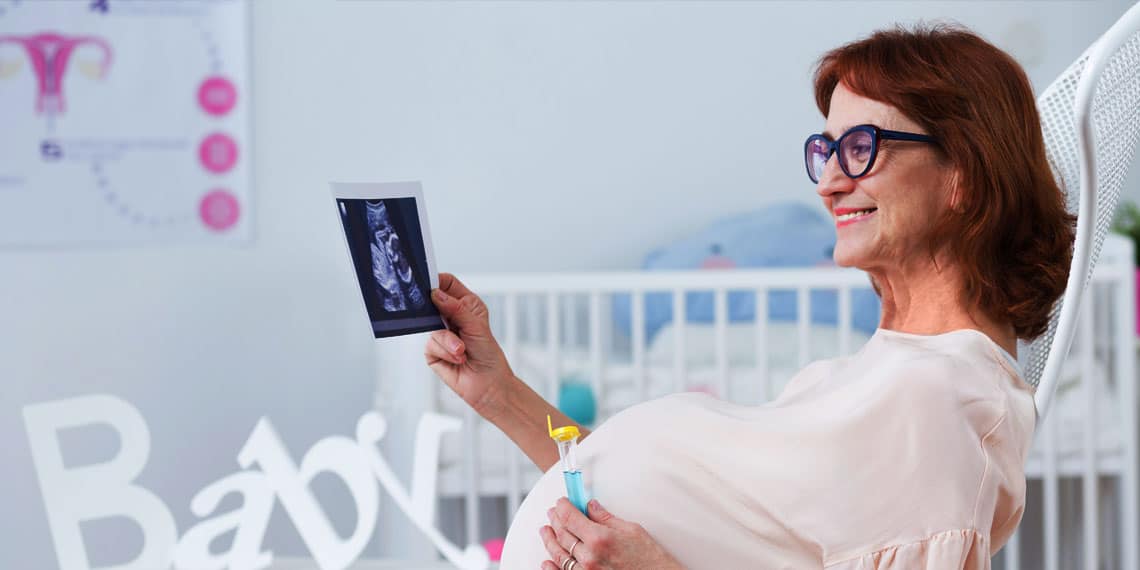
Adjunctive approaches such as ovarian platelet-rich plasma (PRP) combined with exosome-based therapies are explored aimed at enhancing primordial follicle recruitment and improving the intra-ovarian microenvironment. Although these interventions can transiently improve ovarian activity in selected patients, their efficacy diminishes with advancing age, and they do not reverse the fundamental age-related decline in oocyte competence (Sfakianoudis et al., 2019). In our clinical experience, the oldest patient to achieve a natural or IVF-assisted pregnancy following ovarian PRP treatment was 47 years of age, underscoring that biological limits remain despite emerging regenerative approaches. Therefore, a meaningful response to ovarian PRP treatment can be expected up to the age of 47 in patients who still have an acceptable level of primordial follicle activity.
When ovarian platelet-rich plasma (PRP) therapies were first introduced into clinical practice, the prevailing hypothesis which was largely driven by early experimental work from Harvard-affiliated groups was that PRP might activate a dormant ovarian stem cell population capable of de novo oogenesis in adult women. This concept was based on preclinical observations suggesting the existence of mitotically active germline stem cells within the ovarian cortex and their potential to differentiate into functional oocytes under specific stimulatory conditions (Johnson et al., 2004; White et al., 2012). However, as we began to apply ovarian PRP in clinical setting, accumulating observations indicated that this mechanism was unlikely to be the dominant biological pathway in humans. Instead, clinical and laboratory findings increasingly suggested that the primary responders to PRP exposure were residual primordial follicles rather than a newly activated stem cell lineage.
In practice, patients undergoing ovarian PRP did not demonstrate evidence of sustained or exponential follicle generation, which would be expected if true stem-cell–driven oogenesis were occurring. Rather, observed changes such as transient increases in AMH, occasional resumption of menses in peri- or postmenopausal women, and limited follicular recruitment on ultrasound were more consistent with enhanced activation, survival, or synchronization of pre-existing primordial follicles (Sfakianoudis et al., 2019; Pantos et al., 2022). From a mechanistic standpoint, this aligns with the known biological effects of PRP, which include delivery of growth factors such as PDGF, VEGF, TGF-β, and IGF-1 that can improve local angiogenesis, reduce oxidative stress, and modulate intra-ovarian signaling pathways involved in follicle activation and early folliculogenesis (Marx, 2004; Kawamura et al., 2013).
These observations suggest that ovarian PRP may function primarily as a microenvironmental modulator rather than a true regenerative therapy capable of replenishing the ovarian reserve. By improving stromal support, vascularization, and local cytokine balance, PRP can facilitate the recruitment or maturation of follicles that were already present but functionally quiescent. This distinction is clinically important, as it explains both the limited magnitude and the age-dependent nature of PRP responses, and it underscores why ovarian PRP cannot overcome the fundamental constraints imposed by advanced ovarian aging or severe follicular depletion. Consequently, PRP should not be viewed as a method for inducing true neo-oogenesis in adult human ovaries.
Similarly, advanced techniques such as mitochondrial replacement therapy (MRT) or IVF with cytoplasmic transfer still require the availability of mature (MII) oocytes and therefore remain constrained by ovarian aging and residual oocyte quality (Zhang et al., 2017).
Therefore, even in patients who have not yet entered menopause, continue to menstruate regularly, and demonstrate some degree of residual ovarian activity, the likelihood of achieving pregnancy with autologous oocytes declines sharply beyond the age of 47–48. At this stage, the limiting factor is not merely ovarian function, but oocyte competence, as age-related meiotic errors, mitochondrial dysfunction, and cumulative DNA damage substantially impair the developmental potential of remaining oocytes. While advanced and experimental interventions such as ovarian PRP, cytoplasmic transfer, or mitochondrial replacement techniques may modestly optimize the ovarian or cytoplasmic environment, they cannot fully overcome the fundamental biological constraints imposed by oocyte aging. Consequently, the probability of achieving a viable, euploid embryo and a sustained pregnancy with one’s own eggs after this age remains extremely low, and this reality should be clearly addressed during patient counseling to support informed and realistic decision-making.
In contrast, pregnancy outcomes using donor oocytes are largely independent of the recipient’s chronological age, provided that the uterus is hormonally prepared and the patient is medically fit for pregnancy. At North Cyprus IVF Centre, IVF with donor eggs is routinely offered to women over the age of 50, with a legal treatment limit of 56 years. Up to this age, treatment can be provided without additional regulatory approval. Beyond 56 years, cases are evaluated individually and require authorization from the Ministry of Health. The success of donor-egg IVF in women over 50 has been well documented, with implantation and live birth rates comparable to those of younger recipients, reflecting the dominant role of oocyte age rather than uterine age in reproductive outcomes (Paulson et al., 2002; Sauer, 2015).

High-quality fertility care encompasses effective communication, individualized medical decision-making, and empathy, all of which are essential for addressing patients’ expectations, values, and emotional well-being. While legal or ethical constraints may at times limit available options, transparent dialogue between patients and clinicians often allows for mutually acceptable and medically sound solutions.
Age remains one of the most debated factors at the intersection of IVF legislation and clinical practice. Many fertility centers impose legal or institutional age limits that range widely between countries, sometimes as low as 42 years and in other settings extending to 50 years or beyond. Notably, many of these restrictions are driven more by ethical or societal considerations than by objective medical contraindications. From a medical standpoint, fertility treatment is a healthcare intervention and should be guided primarily by evidence-based assessment of maternal health and pregnancy risk. Provided that a woman is thoroughly evaluated and found to be medically fit, chronological age alone should not constitute an absolute barrier to treatment (ESHRE, 2015).
Female reproductive aging begins early in life. The ovarian reserve is established during fetal development, with an estimated peak of several million oocytes, which subsequently undergo continuous attrition. From puberty onward, follicular loss accelerates, leaving approximately 10% of the original reserve by the age of 30 and less than 3% by the age of 40 (Wallace and Kelsey, 2010). While oocyte quantity and quality decline sharply, uterine receptivity remains largely preserved with age, allowing successful pregnancies in older women when donor oocytes are used. This distinction underpins the rationale for offering donor-egg IVF to postmenopausal women.
Life expectancy and overall health status have improved substantially over recent decades. In Europe, average female life expectancy now exceeds 82 years, and many age-related medical conditions are effectively managed with modern medical care. Current evidence regarding pregnancies in women over 50 does not demonstrate disproportionate maternal risk when patients are carefully screened and monitored (Sauer, 2015). Genetic risks to the offspring are largely mitigated through the use of young donor oocytes, and menopause itself should no longer be viewed as an absolute marker of reproductive incapacity, just as premature menopause in younger women is not considered a contraindication to fertility treatment.
At North Cyprus IVF Centre, fertility treatment for women over 50 is offered based on individualized medical assessment rather than arbitrary age thresholds. Our approach aims to eliminate age-based discrimination while maintaining rigorous medical standards. All candidates undergo comprehensive evaluation, including hematologic, renal, hepatic, metabolic, and hormonal testing, as well as cardiovascular screening with electrocardiography and an echocardiogram. Conditions that may be exacerbated by pregnancy, such as uncontrolled hypertension, diabetes, or significant cardiac disease, are considered contraindications regardless of chronological age. Patients are also counseled extensively regarding the increased likelihood of pregnancy-related complications in older age groups and the need for intensified antenatal surveillance.
For women over 50, fertility treatment options are necessarily limited by ovarian biology. Ovarian PRP with exosomes remains an exploratory intervention in this age bracket with limited evidence and should be approached as such. In contrast, IVF with donor oocytes remains the gold standard, offering high success rates and well-established safety profiles. In this context, medical judgment, rather than age alone, should guide decision-making, ensuring that fertility care remains ethical, evidence-based, and patient-centered.
For more information on our treatments, please contact us!
Share this information with others!
